Choosing Between Wool Blend Coat and Pure Wool Outerwear
 Jordan HaleStaff Writer
September 16, 2026. This comparison explores the functional trade-offs between synthetic-natural hybrids and pure animal fibers. It is written for consumers navigating the balance of luxury feel and long-term structural integrity.
The Traditional Weight of Pure Fiber
Standing on a drafty platform last November, the first thing I noticed was how heavily a traditional pure wool garment sits on the shoulders. There is an undeniable heritage to 100% wool, a material prized for centuries for its natural insulation and breathability. However, pure wool is a protein fiber, and like all organic materials, it possesses inherent vulnerabilities that become apparent under the stress of daily commuting. The primary challenge lies in structural memory. Without the reinforcement of technical fibers, a pure wool coat often loses its crisp silhouette at the elbows and hem, succumbing to the natural stretch of the yarns. According to textile research published by the International Wool Textile Organisation, while wool is naturally resilient, its performance in high-friction environments is significantly enhanced when integrated with stabilizing agents.
Beyond the silhouette, maintenance remains a persistent hurdle for the pure wool enthusiast. These garments are prone to pilling in areas of high contact, such as where a bag strap rubs against the chest, and they require meticulous seasonal storage to prevent moth damage. The tactile experience is soft, yet the fragility often dictates a level of care that doesn't always align with a modern, fast-paced lifestyle. When considering a Mens Wool Blend Winter Coat, the conversation shifts from preservation to performance, as the introduction of synthetic fibers creates a shield against the mechanical wear that typically degrades pure wool over time. The weight of tradition is significant, but it often comes with a requirement for constant vigilance that many modern wearers find taxing.
The Engineering of the Wool Blend Coat
Somewhere around week two of wearing a Wool Blend Coat, I realized I hadn't reached for a fabric shaver once. The integration of polyester or nylon into the wool matrix acts as a structural scaffold. It turns out that by blending these materials, the garment gains a 'memory' that pure wool lacks. This is particularly evident in structured silhouettes like a Long Double Breasted Winter Coat, where the sharp lines of the lapels and the straight fall of the hem are critical to the aesthetic. The blend prevents the sagging that often plagues heavy natural fabrics after they have been caught in a damp sleet or heavy snow.
In terms of thermal regulation, the Wool Blend Coat utilizes the natural air-trapping properties of wool while leveraging the moisture-wicking and quick-drying capabilities of synthetics. This makes it a superior candidate for the Best Wool Blend Coat For Extreme Cold, as it manages internal humidity better than a dense, slow-drying 100% wool piece. I keep coming back to the way the fabric feels underhand—it retains the matte, sophisticated finish of wool but possesses a subtle springiness. This elasticity means the coat bounces back after being tossed over a chair or packed into a suitcase. The blend isn't about diluting the quality of the wool; it is about fortifying it. The result is a garment that feels substantial and protective without the cumbersome bulk or the high-maintenance requirements of its pure-fiber counterparts. It bridges the gap between the sartorial elegance of the past and the textile technology required for today's environment.
A Framework for Selecting Your Winter Shield
Deciding between these two paths requires an honest assessment of your environment and your willingness to perform garment surgery. If you live in a climate with high humidity or frequent precipitation, the resilience of a blend becomes a necessity rather than a luxury. The way a Wool Blend Coat handles moisture—resisting the heavy, soggy feeling of saturated natural fibers—is a primary differentiator. When looking at a Mens Wool Blend Winter Coat, consider the frequency of use. A daily driver needs the abrasion resistance that only a blend can provide, whereas a coat worn once a month to formal events might favor the drape of pure wool. For those seeking a Long Double Breasted Winter Coat, the blend ensures the heavy fabric doesn't stretch out the buttonholes or distort the shoulders over years of wear.
Before making a final selection, evaluate these criteria to ensure the garment meets your specific needs for the Best Wool Blend Coat For Extreme Cold:
- Assess the tactile recovery by squeezing the fabric; a quality blend should spring back instantly without leaving deep wrinkles.
- Check the weight-to-warmth ratio to ensure the coat provides insulation without causing shoulder fatigue during long walks.
- Examine the weave density, as a tighter blend offers superior wind resistance compared to loose-knit pure wool.
- Consider your storage capabilities, noting that blends are generally more resistant to environmental pests and humidity.
- Review the care instructions to ensure the maintenance schedule matches your lifestyle.
The coat in this guide
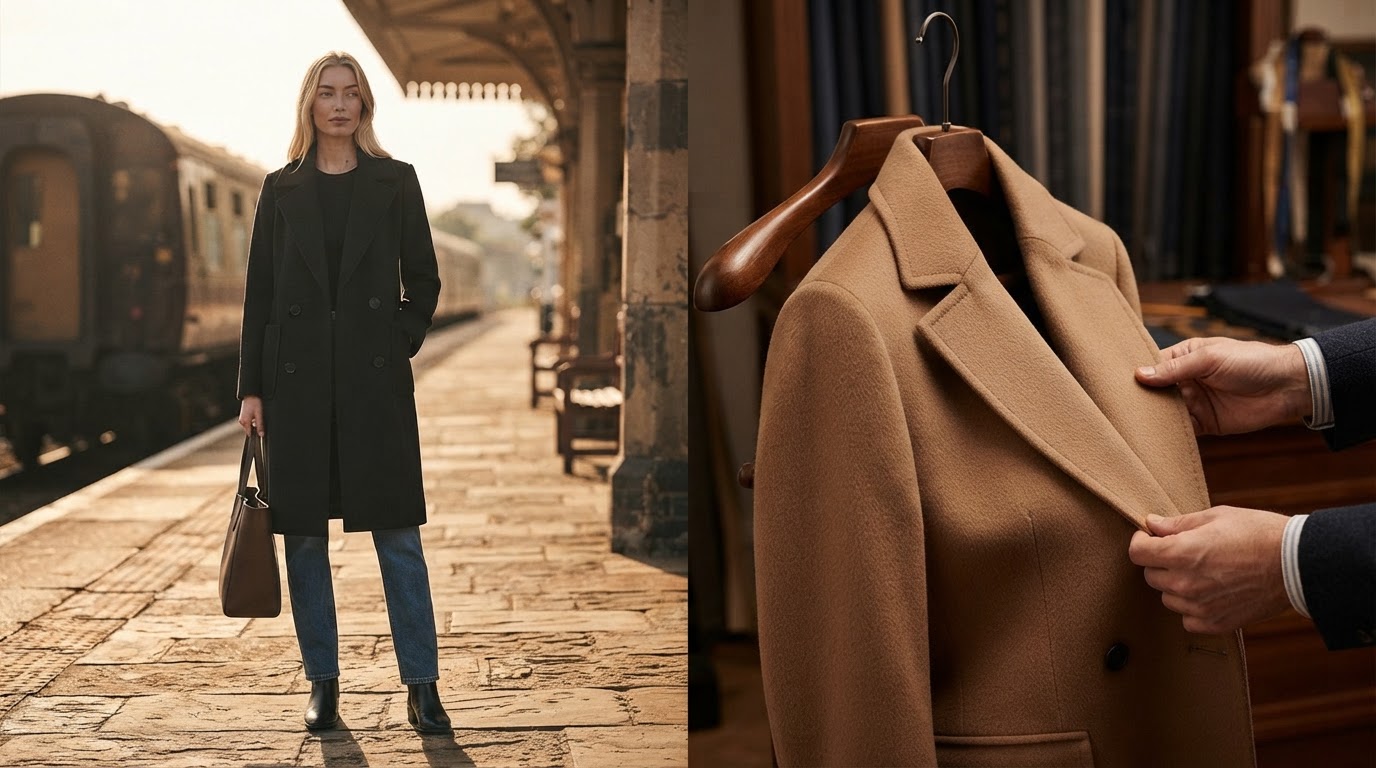
The coat described throughout this guide is our double-breasted wool-blend winter coat: a wide notch lapel, two functional side-seam pockets, decorative back buttons and a full lining, cut long enough to sit below the knee on most heights. The shell is 95% polyester with 5% wool, and it comes in thirteen colours in sizes XS to XXL. See the coat, all thirteen colours and the full size chart.