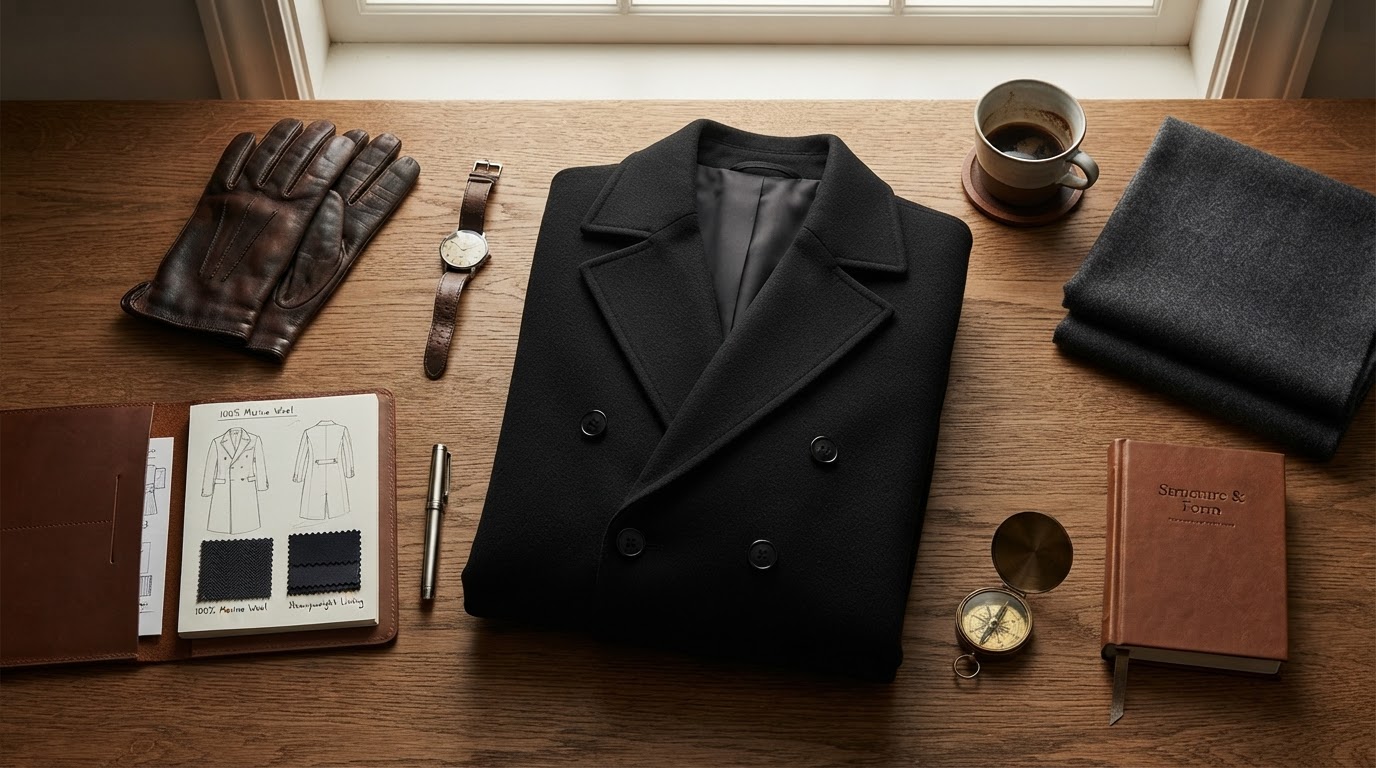
Selecting a Mens Double Breasted Wool Coat for Longevity
 Sam VasquezBuying Guide Lead
September 8, 2026. This guide examines the structural requirements and material compositions necessary for a high-performance mens double breasted wool coat. It is intended for professionals who need a durable outer layer that maintains its shape through daily transit and varied weather conditions.
The Structural Demands of Double-Breasted Outerwear
Choosing a mens double breasted wool coat requires more scrutiny than a standard single-breasted jacket because the overlapping fabric panels add significant weight and bulk to the torso. If the material is too heavy, the coat feels restrictive; if it is too light, the front panels sag and lose the sharp, military-inspired lines that define the style. According to Hockerty, modern silhouettes often include variations like the Iron gray melange long Double-Breasted Coat which utilizes wool blends to achieve a "soft touch" while maintaining the structural integrity needed for peak lapels and contrasted buttonthreads.
I have found that the primary challenge for most men is finding a balance between warmth and mobility. A formal winter coat for suits must have enough room in the shoulders to accommodate a blazer without creating tension across the chest when fully buttoned. When you opt for a navy wool double breasted overcoat, you are investing in a piece that traditionally signals formality, but the weight of the fabric will dictate whether you can wear it for a ten-minute walk or a two-hour commute. Between these two, I'd go with the overcoat for strictly professional settings, as the added length provides better protection for suit trousers. However, if your daily routine involves frequent driving or sitting, a slim fit double breasted wool jacket offers a cropped alternative that won't bunch up at the waist.
How Wool Blend Coat Optimizes the Double-Breasted Silhouette

Photo by Çağla Demirbilek on Pexels
At Wool Blend Coat, we focus on specific ratios that prevent the common pitfalls of 100% heavy wool, such as pilling at the friction points under the arms or excessive weight that leads to shoulder fatigue. Our designs often mirror the technical specifications found in industry standards, such as the 65% wool and 35% polyester blend cited by Angel Jackets for their long wool overcoats. This specific blend is crucial because the synthetic component provides the tensile strength needed to support the double-breasted closure, ensuring the buttons don't pull or distort the fabric over time.
If you're on a budget, you might look at options like the Three Button Long Overcoat at Macy's, which frequently retails around $159.00. While these are accessible, they often lack the internal canvassing found in a dedicated Wool Blend Coat. We prioritize a knee-length cut and a single back vent, similar to the Kenney model, to ensure that the coat moves with the body rather than acting as a rigid shell. This is particularly important when layering over a formal winter coat for suits or a thick knit. The inclusion of a 100% polyester lining in our coats ensures that the garment slides easily over wool suits, preventing the "catching" sensation that occurs with unlined or poorly lined alternatives. For those seeking a specific aesthetic, a navy wool double breasted overcoat from our collection provides a deep, color-fast hue that resists the fading often seen in cheaper dye processes.
Evaluating Fit and Material Quality

Photo by Kenzhar Sharap on Pexels
When you are ready to purchase, you need to look past the brand name and look at the construction details. Skip this if you live in a climate that rarely drops below 50 degrees Fahrenheit; a double-breasted coat provides double the insulation across the chest, which can lead to overheating in mild weather. However, for true winter protection, the double-layered front is an functional advantage. Here's what I'd actually buy: a mid-weight blend that utilizes a peak lapel to draw the eye upward, balancing the horizontal width created by the two rows of buttons.
Use this framework to evaluate your next purchase:
- Check the button shank: Double-breasted coats have more tension on the buttons; they should be reinforced with a small backing button or a sturdy thread wrap.
- Verify the shoulder seam: It should sit exactly at the edge of your natural shoulder or slightly outside if you plan to wear a slim fit double breasted wool jacket underneath.
- Assess the vent height: A single back vent should end mid-seat to allow for stride length without exposing too much of your inner layers to the wind.
- Inspect the lapel roll: The lapels should have a natural curve rather than a flat, pressed crease, which indicates better internal construction.
- Test the pocket depth: Flap pockets are standard, but ensure they are deep enough to hold gloves without bulging, which ruins the coat's profile.
The coat in this guide
The coat described throughout this guide is our double-breasted wool-blend winter coat: a wide notch lapel, two functional side-seam pockets, decorative back buttons and a full lining, cut long enough to sit below the knee on most heights. The shell is 95% polyester with 5% wool, and it comes in thirteen colours in sizes XS to XXL. Browse the thirteen colours and check your size.